
Spring season corresponds to Wood Energy (hello pollen) which can bring along many health problems such as allergies, asthma, colds. It is essential particularly in the spring to cleanse the liver and lungs of mucus to bring harmony to this system and not create stagnation. The most vibrant way to alleviate stagnant energy from the system is with a lower leg massage!
So if you know anything about the Traditional Chinese Meridians they come in pairs of Yin/ Yang. Yin is the downward flow of energy and just as lymph and blood can stagnate in the lower limbs so does prana/energy. A common group of points of these Yin meridians which are often needled together are SP 6 and LV 3 strategically placed along the Deep Front Line as Thomas Myers illustrates in his book Anatomy Trains.
The DFL, as I will call it, includes the muscles tibialis posterior, the adductors, and the deep pelvic fascia and many more structures pictured here.

San Jin Jiao or Spleen 6
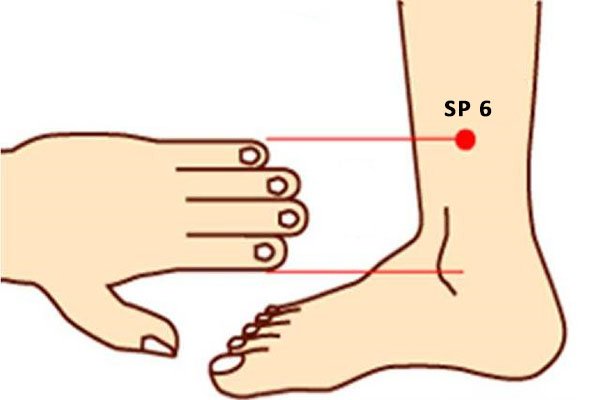
The Chinese name for SP 6 is San Yin Jiao which means Three Yin Intersection. This point corresponds to the 3 lower limb Yin Meridians of Traditional Chinese Medicine, Liver, Spleen and Kidney. So think of this point as where 3 rivers meet, and when these rivers are free of sticks/ limbs then rivers rush and flow freely, but the pond at which they meet can get murky and stagnate. By stimulating this area you release the mud and earth that has been built. In the traditional sense Sp 6 is most commonly stimulated for digestive, gynecological, urinary, emotional, and sleep disorders but because it is connected to so many systems, it often included in many treatments. What is so fascinating about this point is when we look at myofascial anatomy we find that most points on the three leg yin meridians influence the The Deep Front Line.
Keeping with the theory that the DFL consolidates the three leg yin meridians into one line, we can notice that any of the leg yin points share similar functions in treating an array of disorders within the deep connections to the myo-fascia of the pelvis.
Spleen 6 and Liver 3 (a favorite combination of mine) because it is located on the inside of the leg above the ankle but the fascinating part is that the ancient healing of the Traditional Chinese Meridians directly correspond to the myofascial meridians that we have discovered in Western Medicine.
Taichong or Liver 3

The Chinese name for Liver 3 is Taichong which means The Great Rushing by releasing and clearing frustration and eases resentment and anger. LV 3 is indicated for for heat in the digestive tract, heat and redness in the eyes and help relieve irregular menses . The Liver Meridian channels energy from the liver to various parts of the body, including the foot. It is associated with detoxification and emotional regulation. LV 3 can be used to clear the liver producing a sense of happy calm. While there are many point combinations possible with the leg yin meridians, we can conclude that points that influence the DFL will be on either the spleen, liver, or kidney meridians.
It’s fascinating to think about how the Deep Front Line connects these meridians and facilitates a broader understanding of bodily functions, including digestion, emotional health, and detoxification. Examining the myofascial anatomy of the leg yin meridians and Deep Front Line (DFL), we find that these points have a direct connection to the deep fascia in the pelvis. In summary, points on the DFL share similar functions in treating urinary, reproductive, pelvic, and internal medical disorders. The synergy between these points and their myofascial counterparts offers a comprehensive approach to treating various disorders, making the practice of acupuncture and massage not just a physical treatment but a holistic healing experience.
If you’re interested, I can provide more information on specific techniques for stimulating these points or related practices.
 INTEGRATIVE BODYWORK